
Secret Waterfalls of the Blue Mountains
Photographing Hidden Waterfalls in the Blue Mountains: Discovering Nature’s Secret Places
By Mark Zissis Photography
There are few places in Australia that reward adventurous landscape photographers quite like the Blue Mountains. While famous locations such as Wentworth Falls, Katoomba Falls and the Three Sisters attract thousands of visitors each year, some of the most breathtaking scenes remain hidden deep within the valleys, rainforest gullies and sandstone escarpments.
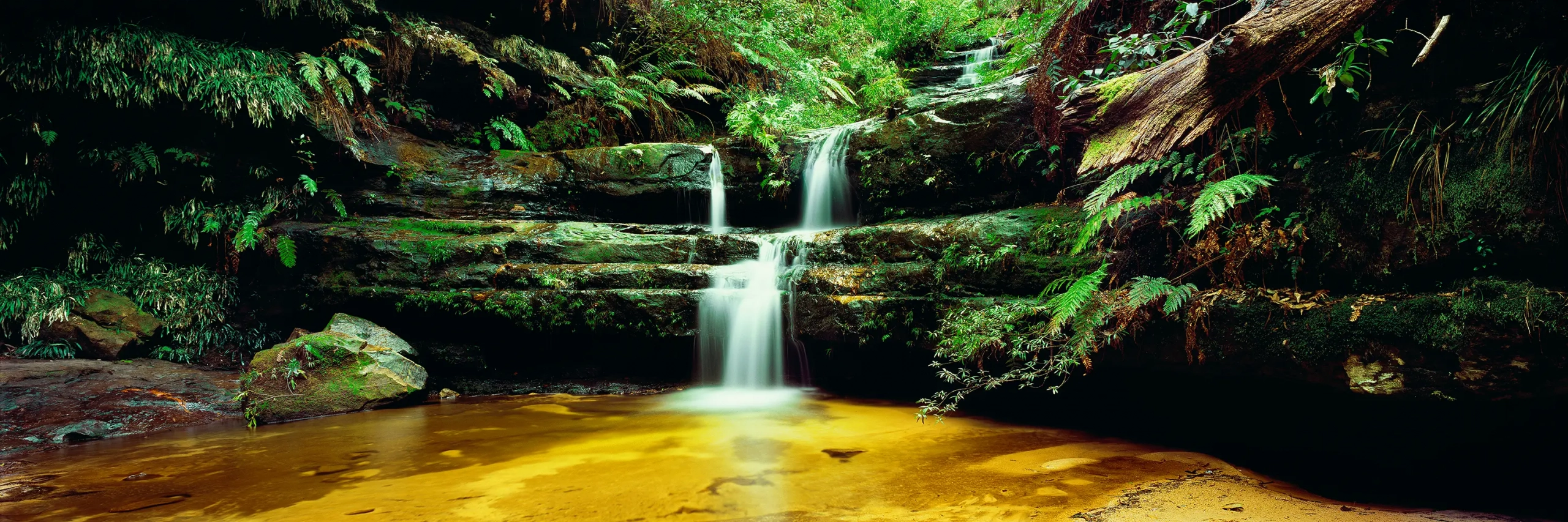
These secluded waterfalls are where the true magic of the Blue Mountains begins. Hidden beneath towering eucalyptus forests, surrounded by ancient tree ferns and moss-covered rocks, they offer photographers an opportunity to capture untouched wilderness away from the crowds.
For me, photographing these hidden waterfalls isn’t simply about creating beautiful images. It’s about slowing down, listening to the sounds of flowing water, breathing in the scent of wet eucalyptus after rain, and experiencing one of Australia’s most remarkable wilderness landscapes.
Why Hidden Waterfalls Are Worth Finding
The Blue Mountains is part of the Greater Blue Mountains World Heritage Area, protecting more than one million hectares of wilderness. While many visitors stay on the main walking tracks, countless smaller waterfalls remain tucked away in narrow canyons and rainforest gullies.
Finding these locations often requires early mornings, careful planning and long hikes, but the rewards are extraordinary.
Hidden waterfalls offer:
- Untouched natural beauty
- Minimal footprints from visitors
- Better photographic compositions
- Peace and solitude
- Unique lighting conditions
- More opportunities for creative photography
Instead of photographing the same famous locations seen thousands of times online, hidden waterfalls allow photographers to produce original landscape images with their own artistic style.
Chasing Light Through the Rainforest
Unlike mountain vistas, waterfalls rely less on dramatic sunrise or sunset colours.
Instead, success comes from understanding light inside the forest.
Dense eucalyptus canopies soften sunlight naturally, producing gentle, even illumination throughout the day.
The best conditions include:
- Overcast mornings
- Light mist
- Rain immediately after a storm
- Soft filtered sunlight
- Low cloud drifting through the valleys
These conditions reduce harsh contrast while making moss, ferns and wet sandstone glow with rich natural colour.
Some of my favourite waterfall photographs have been captured during gentle rain when most people choose to stay indoors.
Rain Makes Better Waterfalls
Many hidden Blue Mountains waterfalls transform dramatically after rainfall.
A small trickle can become a powerful cascade within hours.
The surrounding rainforest becomes saturated with colour:
- Emerald moss
- Bright green ferns
- Wet sandstone
- Reflections on rocks
- Mist rising through the valley
Rain creates atmosphere that simply cannot be replicated during dry weather.
Always check weather forecasts and avoid entering narrow canyons during periods of heavy rainfall due to flash flooding risks.
Safety always comes before photography.

The Best Camera Equipment for Waterfall Photography
Photographing hidden waterfalls often means carrying equipment across steep tracks for several kilometres.
Keeping your kit lightweight makes the experience far more enjoyable.
My preferred equipment includes:
- Full-frame mirrorless camera
- Wide-angle lens (16–35mm)
- Mid-range zoom (24–70mm)
- Carbon fibre tripod
- Circular polarising filter
- Neutral Density filters
- Microfibre cloths
- Waterproof backpack
- Lens rain cover
- Spare batteries
Waterfalls create constant spray, so keeping lenses clean becomes part of the shooting process.
Why a Tripod Is Essential
A sturdy tripod remains the most important accessory for waterfall photography.
Long exposures create the silky flowing water that gives waterfalls their timeless appearance.
Typical shutter speeds include:
- 1/4 second
- 1/2 second
- 1 second
- 2 seconds
- 5 seconds
Each creates a different effect depending on water speed.
Experimenting with exposure times often produces surprisingly different moods from the same composition.
Using Filters
A circular polarising filter is invaluable.
It removes glare from wet rocks, deepens foliage colours and allows viewers to see beneath the water surface.
Neutral Density filters reduce incoming light, making long exposures possible even during daylight.
Together they provide complete creative control over moving water.
Composition Beyond the Waterfall
One of the biggest mistakes photographers make is photographing only the waterfall itself.
The surrounding environment often tells the real story.
Look for:
- Moss-covered boulders
- Ancient tree ferns
- Twisting roots
- Fallen timber
- Sandstone cliffs
- Fern-lined creeks
- Reflections
- Flowing streams
These natural elements guide the viewer’s eye through the photograph while adding depth and scale.
Sometimes the waterfall becomes only one element within a much larger composition.
Photographing During Every Season
One of the great advantages of the Blue Mountains is that waterfalls can be photographed year-round.
Autumn
Golden leaves add warmth against cool rainforest greens.
Morning fog frequently fills the valleys.
Winter
Low light lasts longer.
Mist is common.
Water levels often remain consistent.
Spring
Fresh fern growth creates vibrant colour throughout the rainforest.
Wildflowers begin appearing along walking tracks.
Summer
After summer storms, waterfalls can become spectacular.
Morning shoots help avoid harsh midday light.
Protecting the Landscape
Many hidden waterfalls remain beautiful because relatively few people visit them.
As photographers, we have a responsibility to preserve these fragile environments.
Simple practices include:
- Stay on existing tracks where possible.
- Avoid damaging moss-covered rocks.
- Leave no rubbish behind.
- Respect wildlife.
- Avoid revealing sensitive locations that may become overcrowded.
- Take only photographs and memories.
Protecting these places ensures future generations can experience the same untouched beauty.
Patience Creates Better Images
Landscape photography is rarely about arriving at a location and immediately taking the perfect photograph.
Some of my favourite waterfall images have required hours of waiting.
Waiting for:
- Better light
- Passing mist
- Still reflections
- Improved water flow
- Moving clouds
- Changing weather
Nature rarely follows a schedule.
Patience is often the difference between a good photograph and an unforgettable one.
My Approach to Photographing Hidden Waterfalls
Every photograph begins long before I unpack my camera.
I spend time exploring, observing the landscape and understanding how the water moves through the forest. Rather than rushing to capture the obvious scene, I look for the small details that many people overlook—the way morning light filters through the canopy, the textures of ancient sandstone, the vibrant greens of moss after rain, and the graceful curves of tree ferns framing a cascade.
I prefer images that feel natural and timeless. My goal is to create fine art landscape photographs that transport the viewer into the scene, allowing them to experience the stillness, freshness and atmosphere of the Blue Mountains. Careful composition, balanced light and patience are at the heart of every photograph I create.
Why the Blue Mountains Continue to Inspire Me
No matter how many times I return, the Blue Mountains never look the same twice. Weather, seasons and light constantly reshape the landscape, offering endless opportunities for creative photography.
Hidden waterfalls represent the quieter side of this remarkable region. They encourage photographers to slow down, venture beyond the popular lookouts and discover places where nature still feels wonderfully untouched.
Whether you’re carrying a professional camera or simply exploring with a sense of curiosity, these secluded waterfalls remind us that some of the most rewarding photographs are found far from the crowds.
For me, every hidden waterfall tells a story—one of patience, exploration and a deep appreciation for Australia’s extraordinary wilderness. Through my photography, I hope to share not only the beauty of these secret places but also the inspiration they offer to anyone willing to step off the well-worn path and experience the Blue Mountains in a more meaningful way.